
How Do You Choose a Career When the World Keeps Changing?
Last week I spent a day wandering around a university open day with my daughter.
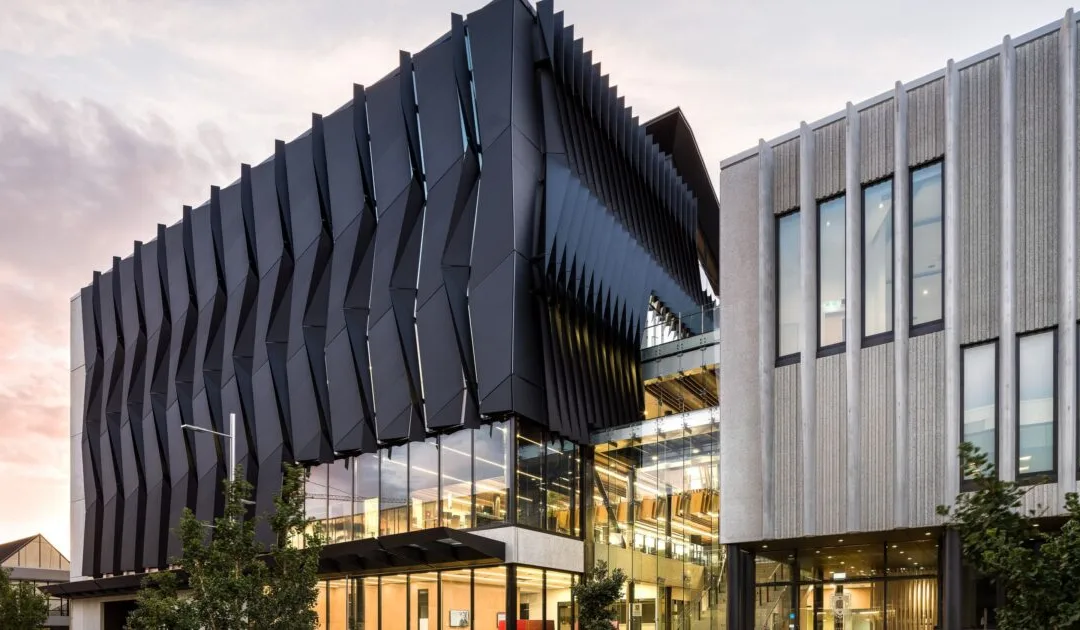
Like many parents who have stood in the middle of a busy campus surrounded by excited teenagers, I found myself caught between two emotions. On one hand, it was impossible not to be swept up in her enthusiasm. Every lecture theatre seemed to open a door into a different future, every conversation hinted at a new possibility, and every group of students we met appeared to be building a life that was uniquely their own (not to mention, there was free candy floss and mini doughnuts).
On the other hand, I couldn't stop thinking about the weight of the decisions that sit just beneath all that excitement.

Universities in NZ rightly encourage young people to think about their interests, discover their strengths, and explore the pathways available to them. They talk about "getting started" by finding a course of study that aligns with who you are and what you care about. It's good advice. Yet walking those halls, I couldn't shake the feeling that today's seventeen-year-olds are being asked to make choices in circumstances unlike any generation before them.
When many of us 'older folk' were growing up, the future felt comparatively stable. The professions existed, the pathways were reasonably well understood, and while nobody could predict exactly how their career would unfold, there was at least a sense that the world waiting on the other side of graduation would resemble the one that existed when they enrolled.
That assumption is becoming harder to make.
AI is reshaping industries almost overnight. Entire categories of work are evolving before our eyes. Technologies emerge, mature, and disrupt established ways of working in a matter of years rather than decades. The jobs that will be in highest demand twenty years from now are difficult to define, while some of the roles occupying people today may look entirely different by the time current high school students reach mid-career.
Against that backdrop, asking a young person what they want to do with the rest of their life can feel like asking them to choose a destination while the map is still being drawn.
Perhaps that's why so many young people experience a quiet anxiety around these decisions. It isn't that they lack ambition or opportunity. In many cases, the opposite is true. They are surrounded by choices. Every degree opens multiple pathways. Every interest could become a profession. Every decision seems to close off dozens of equally attractive alternatives.
I think as parents it's easy to place too much importance on choosing 'the path' and not enough on developing the qualities that allow us to navigate an imperfect world.
The most fulfilled people I know rarely followed a straight line. Their careers have been shaped by unexpected opportunities, changing interests, economic shifts, chance encounters, failures, and moments of courage they could never have anticipated when they were seventeen. Looking back, the value of their first decision was not that it precisely predicted their future; it was that it gave them somewhere to begin.
Maybe the question isn't whether young people can accurately predict the future, maybe the question is whether they can develop the adaptability to thrive within it…. curiosity, resilience, a willingness to keep learning, the confidence to change course when necessary. These qualities will surely prove far more valuable than any attempt to identify a single career path while still in high school.
As we left the campus, my daughter was still talking excitedly about courses, student life, and all the possibilities that lay ahead. Listening to her, I realised that what she had discovered that day wasn't a career. It wasn't even a plan.
It was possibility.
And perhaps that is the thought worth holding onto in a world that often feels uncertain. While the future may be harder to predict than ever before, young people have access to more opportunities, more knowledge, and more ways to shape their lives than any generation before them. The challenge is not finding the one correct path. The challenge is having the courage to take a first step, knowing that the path will almost certainly change along the way.
That uncertainty can feel uncomfortable, but it can also be viewed as something else entirely. It is freedom.
While AI is changing how we work, it cannot replace the value of genuine human connection. Those who can combine technology skills with empathy, communication, and adaptability will be best placed to thrive. You can read more about this in Debbie Ireland's blog We Are the Bridge Generation.